Most vehicle owners worry about scratches, rock chips, and paint damage when they’re driving long distances on highways.
What many don’t realize is that some of the biggest threats to their vehicle’s paint are part of their daily commute.
If you drive regularly throughout the DMV area, whether you’re navigating I-495, I-395, I-66, the George Washington Parkway, or local roads around Alexandria, Arlington, Fairfax, and Washington D.C., your paint is constantly exposed to conditions that accelerate wear and deterioration.
At Exodius Auto Protection, we’ve worked on hundreds of vehicles throughout Northern Virginia and the greater DMV region. One thing we’ve consistently noticed is that many owners underestimate just how aggressive local driving conditions can be on modern automotive paint.
Let’s look at why DMV roads are tougher on your vehicle than most people think, and what you can do to protect your investment.
The DMV Creates a Perfect Storm for Paint Damage
The Washington metropolitan area presents a unique combination of conditions that continuously attack your vehicle’s exterior.
Unlike regions that primarily deal with one environmental challenge, DMV drivers face several at once:
- Heavy commuter traffic
- Ongoing road construction
- Seasonal temperature swings
- Winter road treatments
- High traffic volume from commercial vehicles
- Urban pollution
- Dense tree coverage in many residential neighborhoods
Individually, these may seem minor, but combined, they create one of the most demanding environments for vehicle paint protection.
Construction Zones Are Everywhere
The DMV continues to experience significant growth, which means road construction is almost constant.
Fresh asphalt, gravel, loose aggregate, and construction debris are common sights on many local roads.
Every time another vehicle kicks up debris, your paint becomes a target.
The front bumper, hood, mirrors, rocker panels, fenders, and lower doors absorb the majority of this impact.
Many of the rock chips we see on vehicles are not the result of a single major incident.
Instead, they develop gradually from thousands of small impacts accumulated over months of driving.
By the time most owners notice the damage, the paint has already been compromised.
Traffic Density Increases Paint Exposure
The DMV consistently ranks among the most congested regions in the United States.
More traffic means:
- More vehicles throwing debris
- More brake dust in the air
- Increased exposure to tire particles
- Greater risk of road contamination
When you’re sitting in traffic, your vehicle is often directly behind dozens of cars, SUVs, trucks, and commercial vehicles.
Every one of them contributes contaminants that eventually settle onto your paint.
Over time, this contamination can reduce gloss, create surface roughness, and contribute to premature paint aging.
Road Salt Doesn’t Just Affect Northern States
Many drivers associate road salt with snow-heavy regions farther north.
However, Virginia, Maryland, and Washington D.C. road crews regularly use salt and de-icing materials during winter weather events.
These products help keep roads safe, but they can be extremely aggressive toward vehicle surfaces.
Salt residue can remain on:
- Paint
- Wheels
- Wheel wells
- Undercarriages
- Trim pieces
If left untreated, these contaminants can accelerate corrosion and contribute to long-term surface degradation.
Even vehicles that appear clean often carry salt deposits in areas owners rarely inspect.
Summer Heat and UV Exposure Accelerate Paint Aging
While winter gets most of the attention, summer presents its own challenges.
The DMV experiences hot, humid summers with prolonged UV exposure.
Ultraviolet radiation gradually breaks down paint systems over time.
This process can contribute to:
- Oxidation
- Clear coat deterioration
- Color fading
- Loss of gloss
Dark-colored vehicles often show these effects sooner because they absorb more heat from direct sunlight.
Parking outdoors every day may not seem harmful in the short term, but years of UV exposure can dramatically impact a vehicle’s appearance.
Tree Sap Is a Bigger Problem Than Most Drivers Realize
Many DMV neighborhoods feature mature trees that provide welcome shade during the summer.
Unfortunately, that shade often comes with consequences.
Tree sap, pollen, bird droppings, and organic debris frequently settle onto vehicle surfaces.
Tree sap can be particularly problematic because it hardens quickly and bonds to the paint.
If not removed properly, it may leave behind staining or require polishing to correct.
We’ve seen vehicles with significant paint damage caused by months of repeated sap exposure while parked under the same tree.
Why Modern Automotive Paint Is More Vulnerable
Many people assume factory paint is tougher today than it was decades ago.
In reality, modern paint systems are often more environmentally friendly but generally softer than older paint formulations.
This makes them more susceptible to:
- Swirl marks
- Fine scratches
- Wash marring
- Rock chips
- Surface etching
The result is that daily driving damage accumulates faster than many owners expect.
A vehicle can look flawless when purchased and begin showing visible defects surprisingly quickly without proper protection.
The Most Vulnerable Areas on Your Vehicle
At Exodius Auto Protection, we routinely see damage concentrated in specific locations.
The highest-risk areas include:
Front Bumper
The first point of contact for road debris.
Hood
Constantly exposed to rocks, sand, and contaminants.
Side Mirrors
Frequently impacted by debris thrown from adjacent lanes.
Rocker Panels
One of the most overlooked but heavily damaged sections of the vehicle.
Rear Quarter Panels
Especially vulnerable on performance vehicles with wider tires.
Door Edges
Susceptible to chips from daily use and parking situations.
Understanding where damage occurs helps owners prioritize protection strategies.
Why Waiting Often Costs More
One of the most common misconceptions is that protection can wait until damage becomes noticeable.
Unfortunately, paint correction becomes more complex and expensive once chips, scratches, and etching have already developed.
Preventing damage is almost always easier than repairing it.
This is particularly true for high-end vehicles, luxury cars, performance vehicles, and specialty finishes.
Once factory paint is compromised, restoring it perfectly becomes significantly more difficult.
The Role of Paint Protection Film
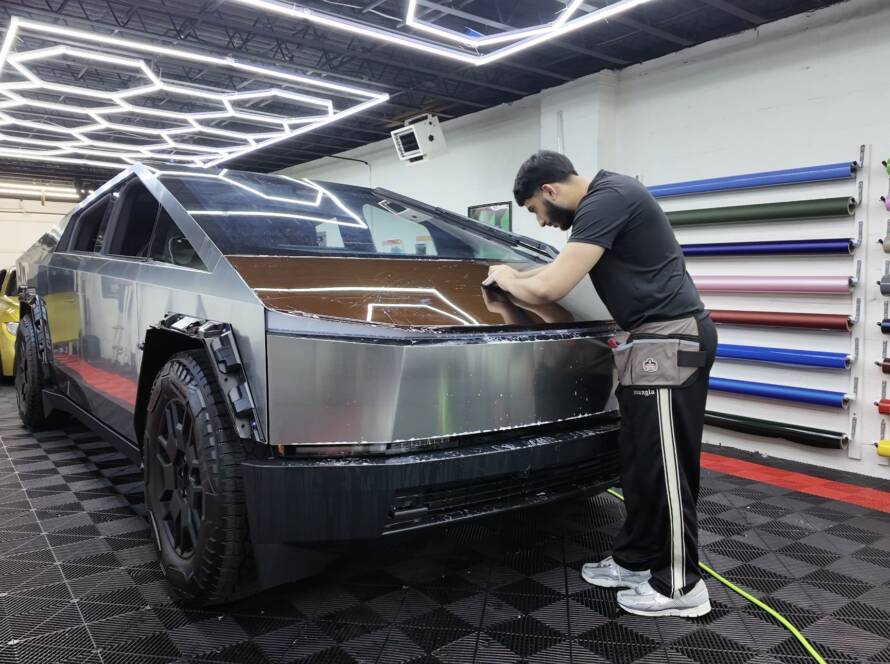
For drivers who spend substantial time on DMV roads, Paint Protection Film (PPF) provides one of the most effective defenses available.
Unlike traditional waxes or sealants, PPF creates a physical barrier between the paint and road hazards.
High-quality films can help protect against:
- Rock chips
- Road debris
- Minor abrasions
- Bug splatter
- Environmental contaminants
At Exodius Auto Protection, we use premium XPEL Paint Protection Film because of its durability, clarity, and self-healing properties.
For many drivers, protecting high-impact areas can significantly reduce long-term paint damage.
Why Ceramic Coating Complements Paint Protection
Ceramic coating serves a different purpose than PPF.
Rather than absorbing impacts, it helps protect against environmental contamination while improving maintenance and gloss.
Benefits include:
- Easier cleaning
- Increased hydrophobic performance
- Enhanced gloss
- Reduced contamination bonding
- Improved resistance to environmental fallout
Many owners choose to combine ceramic coating with PPF for comprehensive protection.
Protecting Your Vehicle in the DMV
The reality is simple:
DMV roads are harder on vehicle paint than most drivers realize.
Heavy traffic, construction zones, seasonal weather changes, road salt, UV exposure, and environmental contaminants all work together to accelerate paint deterioration.
Whether you drive a daily commuter, luxury sedan, performance vehicle, truck, or weekend car, protecting your paint early can help preserve both appearance and long-term value.
At Exodius Auto Protection in Alexandria, VA, we help drivers throughout Northern Virginia, Washington D.C., and Maryland protect their vehicles with premium Paint Protection Film, ceramic coatings, vinyl wraps, and window tint solutions tailored to real-world driving conditions.
If you’re wondering how vulnerable your vehicle is to DMV road damage, our team can help evaluate its condition and recommend a protection strategy that fits your driving habits and goals. Get in touch with us today.